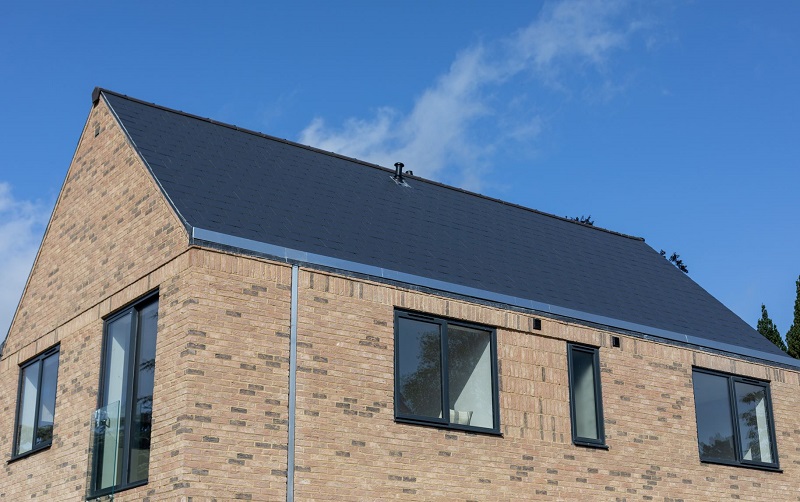
Over the past few decades, the popularity of fibre cement slates has grown as architects, contractors and homeowners have come to appreciate the aesthetic look, ease of installation and performance benefits of this material.
Initially, the material was used in panels as a facade on buildings, due to its low cost, low weight, excellent fire performance and water tightness. During the post-war era, its use grew significantly, with technical developments enabling the manufacture of roof slates, which were thinner and thus lighter than the panels. A large proportion of new build developers now specify this material for residential projects and it is also increasingly prevalent in the domestic retrofit / replacement market.
Advantages of Cedral Slates
Cedral, part of Etex, has a deep-rooted history and heritage of over 100 years’ experience and innovation, perfecting the manufacturing of fibre cement building materials. Cedral fibre cement roof slates combine the benefits of modern slate technology with the look of a natural slate. Cedral slates are consistently lighter yet just as strong as clay, concrete and natural slate products and are suitable for both new builds and renovations.
Long life expectancy and low maintenance: Cedral fibre cement slates are among the strongest in the market, with a minimum life expectancy of 50 years. The roofing slates don’t rust or rot and withstand bacteria, algae and insects.
Resilient in all kinds of weather: Cedral roofing slates resist extreme temperature fluctuations and direct sunlight. They are also durable for long and heavy periods of rain.
Excellent fire performance classification: Cedral fibre-cement slates have a A2-s1,d0 fire rating.
Ease of installation: Unlike natural slate, Cedral fibre cement slates are consistent in terms of quality and size and are pre-holed. Additionally, Cedral roof slates don’t require a heavy load bearing roof construction.
Flexibility in style choices: The numerous installation possibilities and design options are virtually endless. Cedral slates come in four designs – Rivendale, Birkdale, Thrutone Textured and Thrutone Smooth, in a range of colours, in square or dressed edges and in smooth or textured finishes.
Sustainability: Cedral uses fewer raw materials and less energy in its manufacture and produces less waste than some traditional building materials.
Cedral fibre cement roof slates are a good complement to traditional materials used in older buildings such as brick, stone or wood.
Here are two examples illustrating the successful use of Cedral to meet the requirements in a conservation area.
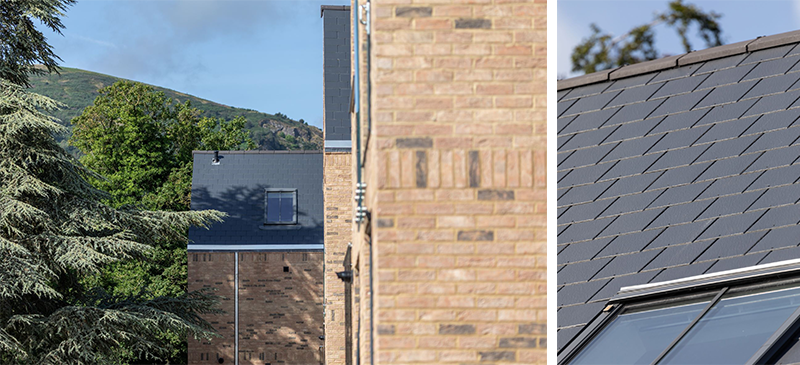
The Cedars
When an old doctor’s surgery in Malvern needed to be demolished to make way for three blocks of 16 apartments, the brief was very specific. The site is surrounded by trees and most of the apartments would have views of the surrounding Malvern Hills. Working in collaboration with the client and architect, Danny Pointon of Brooks & Pointon, the primary contractors on the site, explains the decision to install Cedral fibre cement slates for the roofing to match the high end brief and as part of a successful application for planning permission in this conservation area.
“In Malvern, we have to incorporate a lot of detail into new builds to meet the local planning regulations, hence the brickwork in the finished structure. We used Cedral Rivendale in colour Blue-Black. This is a very attractive and smart product, which fitted with the high end look the clients wanted to achieve. Everybody was very pleased with the finished result.”
The Rivendale slates are designed to reflect the qualities of natural slate and the material, fibre cement, is strong, sustainable material, lightweight and performs in the toughest weather conditions. With a textured surface and dressed edges, Rivendale combines the innovation of modern roofing technology with the look of a natural slate.
The planning application took over a year to be approved but the end result was worth it – a stylish new building that fits into the local environment in an attractive way.
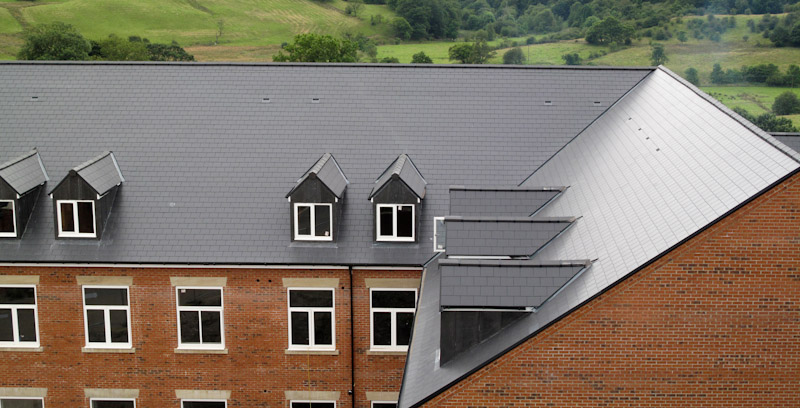
Hawkshaw Lodge
When Bleaklow Mill, a well-known local landmark in Hawkshaw, Greater Manchester, Bleaklow Mill was redeveloped into Hawkshaw Lodge, 24 luxury apartments,
Cedral Rivendale fibre cement slates were specified as a roofing solution. David Walls, managing director of developers Cambrian Homes says,“The fact that this site is set in a green belt conservation area meant that the choice of materials was critical; we wanted a roofing material that would blend into the natural landscape. The local planners originally specified natural slate but, due to the site’s exposed positioning, we had concerns about the fixing. There were also additional worries about the irregularities inherent in natural slate.”
Cedral Rivendale fibre cement slates provided the perfect alternative to natural slate and ensured the project adhered to strict planning requirements stipulated for this conservation area. David explains: “After hearing about the environmental benefits associated with fibre cement, the planners changed their mind about insisting on natural slate. The Rivendale fibre cement slates were aesthetically ideal as well as cost effective.”
Cedral provides comprehensive support for your roofing project. Visit Cedral online, https://www.etexfibrecement.com/en-gb/cedral, for design inspiration, technical documents and certificates.